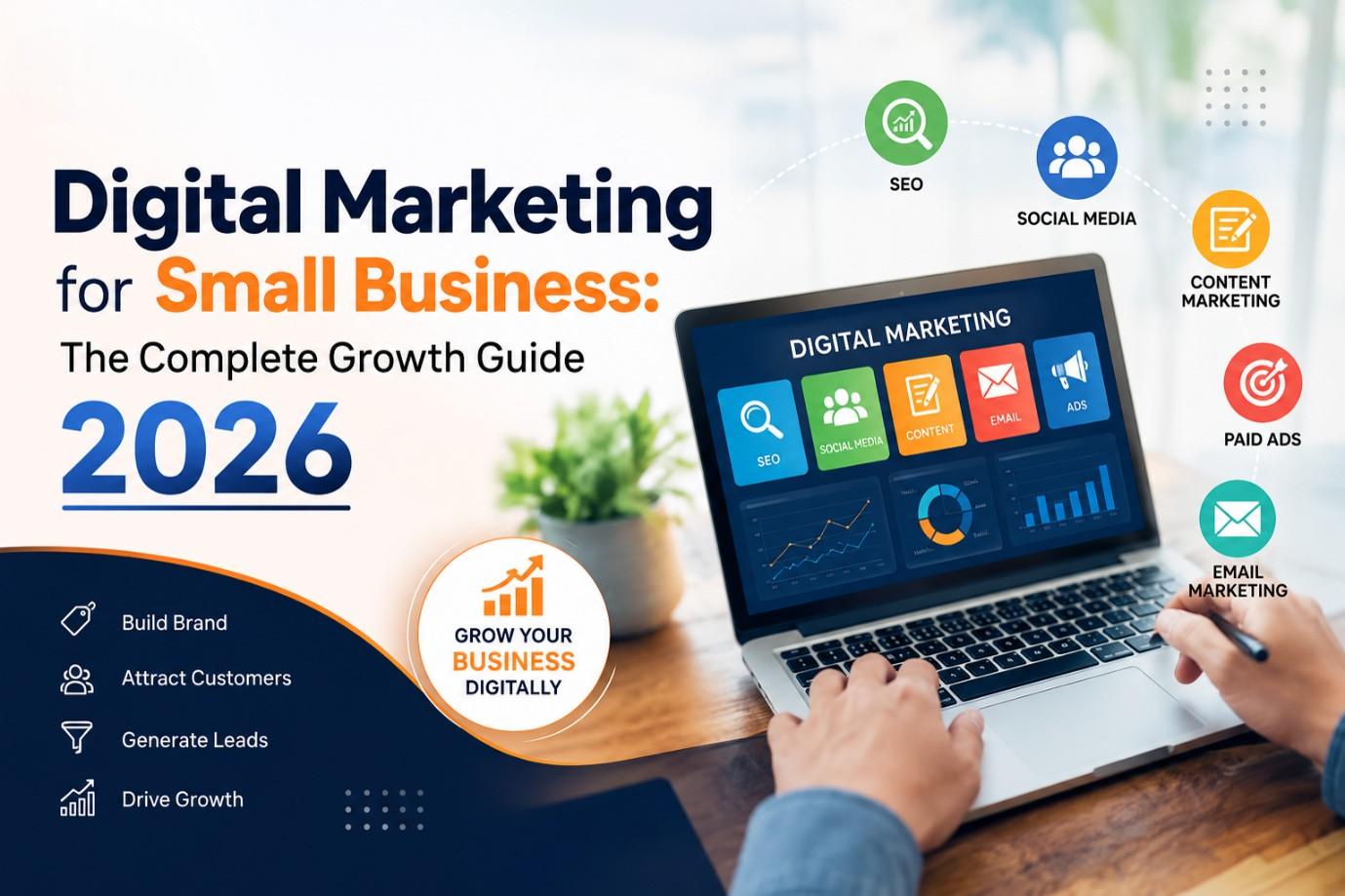
#1 Growing Faster
There are continuously increasing difficulties in small businesses. Many consumers start searching online before making any purchases and will continue their shopping experience online, investigating all brands and products as well as reading customer reviews; as well as expecting companies to provide some level of professionalism on their website.
If customers are unable to locate your company online you will not provide customers to your direct competitors. Digital marketing allows small companies to engage an appropriate target audience, create credibility, create leads that meet the criteria of qualification and ultimately increase sales with a lower cost of marketing than traditional methods of marketing.
This eBook guide will provide you a definition of Digital marketing, its importance to a small business and techniques used to grow your company by 2026.
#2 What Is Digital Marketing?
Digital marketing is a method of promoting your business using online tools such as:
- Search engines (SEO & PPC)
- Social media platforms
- Websites & Landing Pages
- Email marketing campaigns
- Online advertisements (PPC)
- Content marketing & Blogging
Unlike traditional marketing, digital marketing allows you to target specific audiences, track results, and adjust campaigns based on actual data in real-time.
If you are a local business owner, a startup, and/or developing company, digital marketing can help you engage your customers at the exact time and place that they are most likely to be using the Internet.
#3 Why Small Businesses Need It
Many small companies only rely on client referrals and foot traffic to bring in new business. Although client referrals can be a great way to find new customers, they are not a scalable solution.
Digital marketing provides an opportunity for small businesses to reach out to new customers every single day. There are some great advantages to using digital marketing for your business:
Increase Brand Awareness
Customers like buying from brands that they know and trust. By using consistent digital marketing, you keep your business name in front of your potential customers. Once they are ready to buy your product/service, they will remember your business.
Generate High-Quality Leads
Traditional advertising has a very low return on investment (ROI) because it targets everyone, instead of only those who are currently searching for your product/service.
Build Customer Trust
Customers will often do research on your business by looking at your website and reviews, or by checking out your social media accounts. By demonstrating that you have a strong online presence, you will develop trust and credibility among potential customers.
Compete with Larger Companies
Digital marketing has created opportunities for small businesses to effectively compete with larger companies by using targeted marketing techniques that are relevant to potential customers.
Track & Measure Every Result:
#4 Essential Strategies
Not every marketing strategy delivers the same results. The following five methods consistently help small businesses grow.
1. Search Engine Optimization (SEO)
SEO is a way to help increase your site's exposure on search engines. Your aim is to be listed on the 1st page of search results when potential customers are searching for services you provide.
SEO Includes:
- • Keyword research
- • High-quality content
- • Fast website speed
- • Mobile-friendly design
- • Internal linking
- • Optimized images
- • Technical SEO audits
Benefits of SEO:
- • Free organic traffic
- • Higher authority & credibility
- • Better, high-intent lead quality
- • Long-term sustainable growth
- • Lower customer acquisition cost
Example: If a user searches for "Digital Marketing Agency near me," the better optimized a website is, the more likely that business will be listed first.

2. Social Media Marketing
Millions of people use social media every day. Platforms like Instagram, Facebook, LinkedIn, and YouTube help businesses connect directly with potential customers.
Effective Social Media Includes:
Posting consistently keeps your brand visible and builds stronger, long-term customer relationships.

3. Google Ads
With Google Ads, companies can appear near the beginning of search engine results within minutes. This method can be used by companies to generate prospects more quickly.
Advantages Include:
Google Ads work best when combined with search engine optimization (SEO) for compounding long-term growth.
4. Content Marketing
Content marketing helps educate potential customers before they buy. Useful content builds trust and positions your business as an authority/expert.
Helpful content answers target customer questions and improves organic search engine rankings.
5. Website Optimization
Your website should convert visitors into customers. A professional website creates a strong first impression and encourages visitors to take action.
An Effective Website Must Include:
#5 SEO vs Paid Advertising
| Feature | SEO | Paid Ads |
|---|---|---|
| Traffic Timeline | Long-term compounding traffic | Immediate instant traffic |
| Cost Structure | Lower cost over time | Ongoing media spend budget required |
| Core Value | Builds authority & trust | Delivers faster direct results |
| Sustainability | Sustainable and permanent | Stops completely when budget runs out |
| ROI Potential | Higher margins & ROI over time | Great for promotions & instant scaling |
Conclusion: The best businesses combine SEO with paid advertising for consistent, scaling growth.
#6 Common Digital Marketing Mistakes
Many businesses waste time and money by making avoidable mistakes. Avoiding these common mistakes improves marketing performance and customer satisfaction.

#7 How to Build a Marketing Strategy
Building a digital marketing strategy doesn't have to be complex. Follow these five simple steps to align your marketing and business goals.
Define your business goals
Make your marketing trackable by defining exact goals: increase website organic traffic, generate higher volume of leads, improve online direct sales, or build brand awareness.
Identify your target audience
Understand their age, physical location, interest profiles, biggest business/personal problems, and buying behavior to craft appropriate messaging.
Choose the right marketing channels
Focus your energy and spend on the platforms where your target customers actually spend their time instead of trying to be everywhere.
Create valuable, custom content
Answer customer questions directly, solve their minor hurdles with guides, and provide information that proves your industry expertise.
Measure results & optimize analytics
Track performance regularly. Look at data dashboards and adjust your strategies to spend more on what works and cut what doesn't.
#8 Digital Marketing Checklist
Use this interactive checklist to strengthen your online presence. Click items as you check them off to monitor your score!
#9 Frequently Asked Questions
Find answers to common questions about launching digital marketing campaigns for growing companies.
Final Thoughts
One of the best ways for small businesses to gain customers, create trust, and grow their business is via digital marketing. As you develop a digital marketing strategy that incorporates search engine optimization (SEO), content marketing, social media channels, paid advertising, and an effective website, you should also consider utilizing multiple marketing channels rather than relying on one.
No matter if you are a new business or looking to grow your existing business, investing in digital marketing today will provide you with the foundation to achieve future growth and give you a competitive edge over other companies.