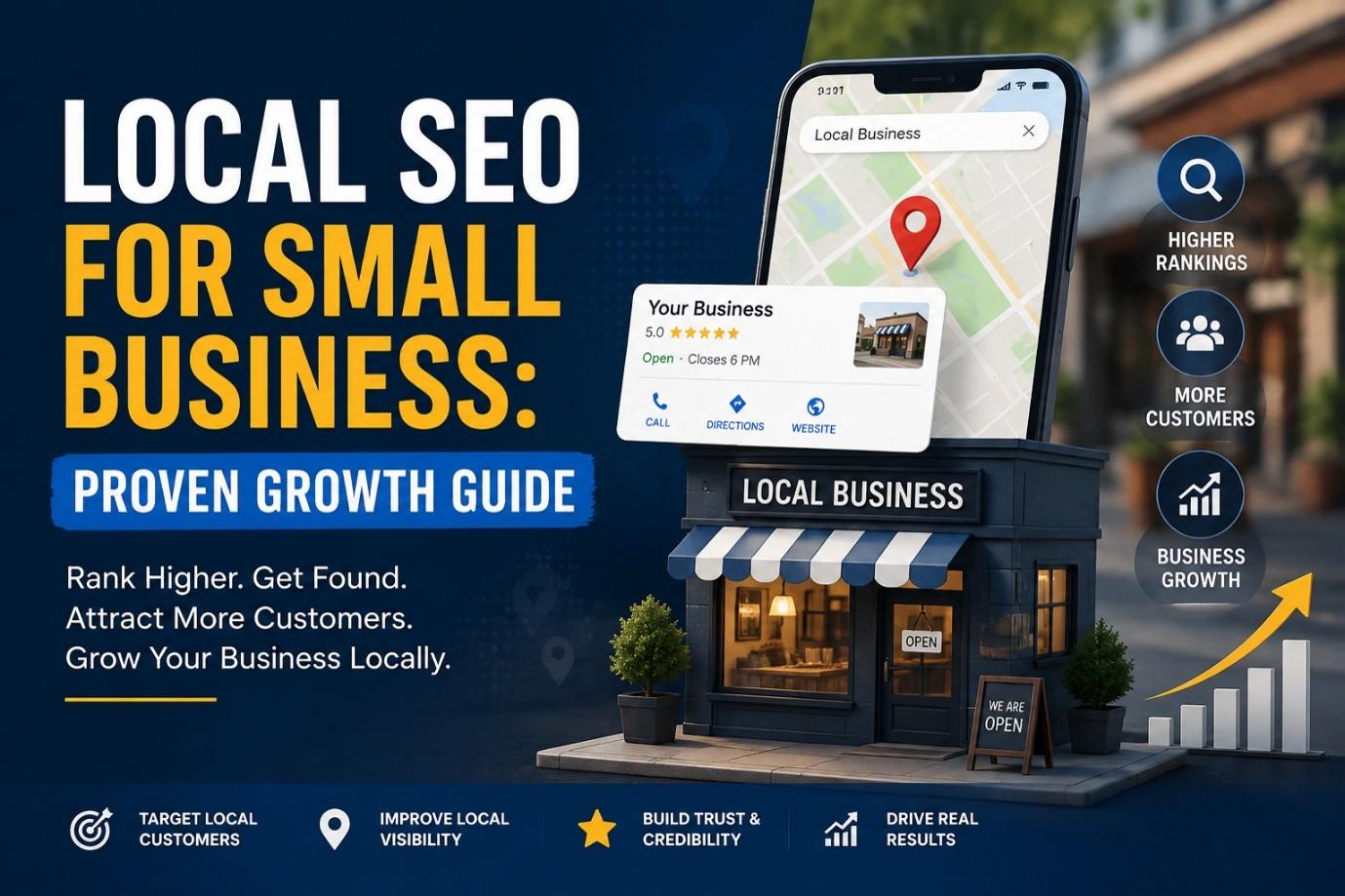
Imagine someone searches Google for "digital marketing agency near me," "best dentist in my area," "plumber near me," or "coffee shop nearby."
- ➢ They already have a need.
- ➢ They are not casually browsing.
- ➢ They are looking for a business they can call, visit, book, or buy from.
Now imagine your business offers exactly what they need—but your competitor appears in the local results, and you don't.
That is the opportunity local SEO is designed to solve.
Local SEO for small business helps your company become more visible when people search for products or services in your area. It connects your business with customers who are already looking for what you offer.
And unlike advertising, strong organic visibility can continue generating discovery after the initial optimization work is complete. This is why local SEO is a critical component of your digital marketing services strategy.
Google says local results are primarily influenced by relevance, distance, and prominence. Complete and accurate Business Profile information, reviews, and other signals help Google understand and evaluate a local business.
The good news? You don't need a huge corporation-sized marketing budget to start. You need the right foundations, consistent execution, and patience.
What Is Local SEO for Small Business?
Local SEO is the process of improving your business's visibility for searches connected to a specific geographic area.
For example:
- "SEO agency in Hyderabad"
- "dentist near me"
- "best salon in Banjara Hills"
- "emergency plumber Hyderabad"
- "Italian restaurant near me"
Local SEO is different from traditional SEO because location and real-world relevance matter heavily.
A business trying to rank nationally for "marketing agency" faces a very different challenge from one trying to rank locally for "marketing agency in Hyderabad."
Local search can produce several types of visibility, including Google Maps results, the local pack, and traditional organic results.
Traditional SEO
"Help me rank for what people search."
Local SEO
"Help me rank when people search for what I offer in the area I serve."
That distinction is extremely important for small businesses.
Why Local SEO Matters for Small Businesses
- ➢ A small business usually cannot outspend a multinational company.
- ➢ But it doesn't necessarily need to.
- ➢ A local business can compete by being more relevant to a specific audience in a specific location.
- ➢ Think about a person searching for a bakery. They probably don't want the world's biggest bakery brand. They want a good bakery that is close enough to visit.
That creates an advantage for businesses that establish strong local relevance. Google's own documentation recommends businesses maintain accurate information, respond to reviews, add useful photos and videos, and keep their Business Profile complete.
Local SEO can help you:
The goal isn't simply more traffic. The goal is more relevant traffic that can become customers.
Pro Tip:
Don't measure local SEO only by rankings. Track calls, enquiries, bookings, website actions, direction requests, and qualified leads.
How Local Search Actually Works
Google doesn't simply choose the business with the most keywords. Local results are influenced by factors including:
1. Relevance
Does your business match what the person is searching for? If someone searches for "family dentist," Google needs to understand whether your business provides that service.
2. Distance
How close is the business to the searcher or the location included in the search? A highly relevant business may still struggle to appear for a searcher who is far outside its service area.
3. Prominence
How established and well-known does the business appear to be? Google says prominence can be influenced by information such as links and reviews.
This is why local SEO isn't about inserting your city name into every sentence. It's about building a consistent, trustworthy digital presence. Google's local ranking guidance explains that local results are primarily influenced by relevance, distance, and prominence. Read Google's local ranking guidance for more details.
1. Claim and Optimize Your Google Business Profile
For most eligible local businesses, this is one of the first places to start.
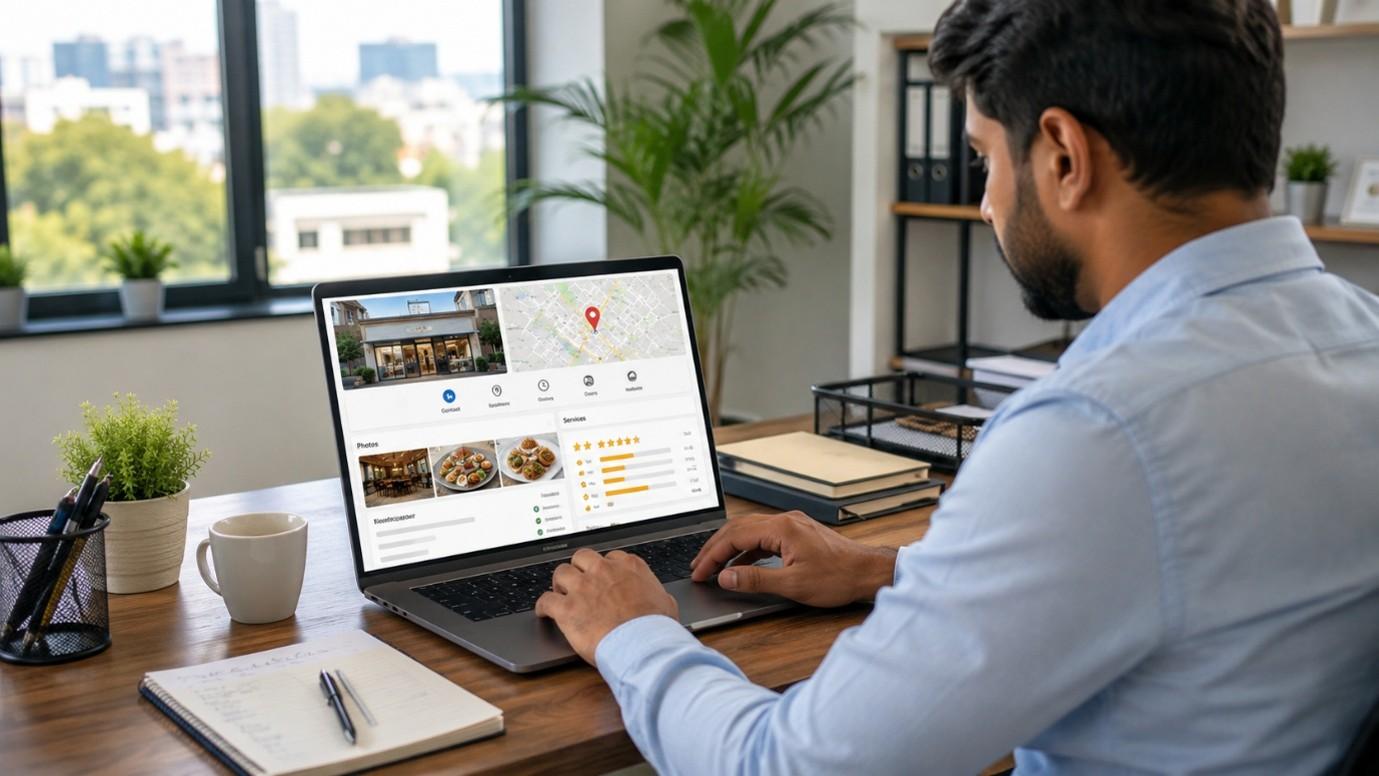
A verified Google Business Profile allows businesses to manage how their information appears across Google Search and Maps.
Start by claiming and verifying the profile. Then make sure the information accurately represents your real business. Pay attention to:
Don't treat the profile like a form you complete once and forget. Treat it as an active customer-facing asset.
2. Choose the Right Business Category
Your primary category helps Google understand what your business does.
For example, a business should select the most specific category that accurately represents its core service rather than choosing unrelated categories simply because they contain valuable keywords.
Google specifically recommends choosing a category that is specific and representative of the business.
Avoid this mistake:
Adding dozens of categories just because they contain keywords you want to rank for.
Better approach:
Choose the category that best describes what customers actually see your business as.
Accuracy beats manipulation.
3. Keep Your Business Information Consistent
Your business details should be consistent wherever customers find you. Pay particular attention to:
- Business name
- Address
- Phone number
- Website
- Opening hours
This information should match across your website, Google Business Profile, important directories, social profiles, and other trusted platforms where appropriate.
Inconsistent information creates confusion for customers and makes your digital presence less trustworthy.
For service-area businesses, make sure your service area reflects where you serve customers. Google provides specific guidelines for service-area and hybrid businesses.
4. Do Local Keyword Research
Don't start with keywords you think people search. Start with what your customers need.
Suppose you run a photography business. Instead of focusing only on "photographer", you could investigate searches such as:
- wedding photographer in Hyderabad
- maternity photographer Hyderabad
- corporate photographer near me
- pre-wedding photography Hyderabad
- newborn photographer near me
The goal is to understand the relationship between: Service + Location + Customer Need.
A simple keyword formula
[Service] + [Location]
Then expand it with intent:
[Service] + [Location] + [problem/use case]
For example:
- "AC repair Hyderabad"
- "AC repair Hyderabad emergency"
- "AC repair near me"
This creates a much stronger content and landing-page strategy than repeating one generic keyword. If you want a step-by-step primer on optimizing your site, you can read this comprehensive local SEO guide.
5. Build Useful Local Landing Pages
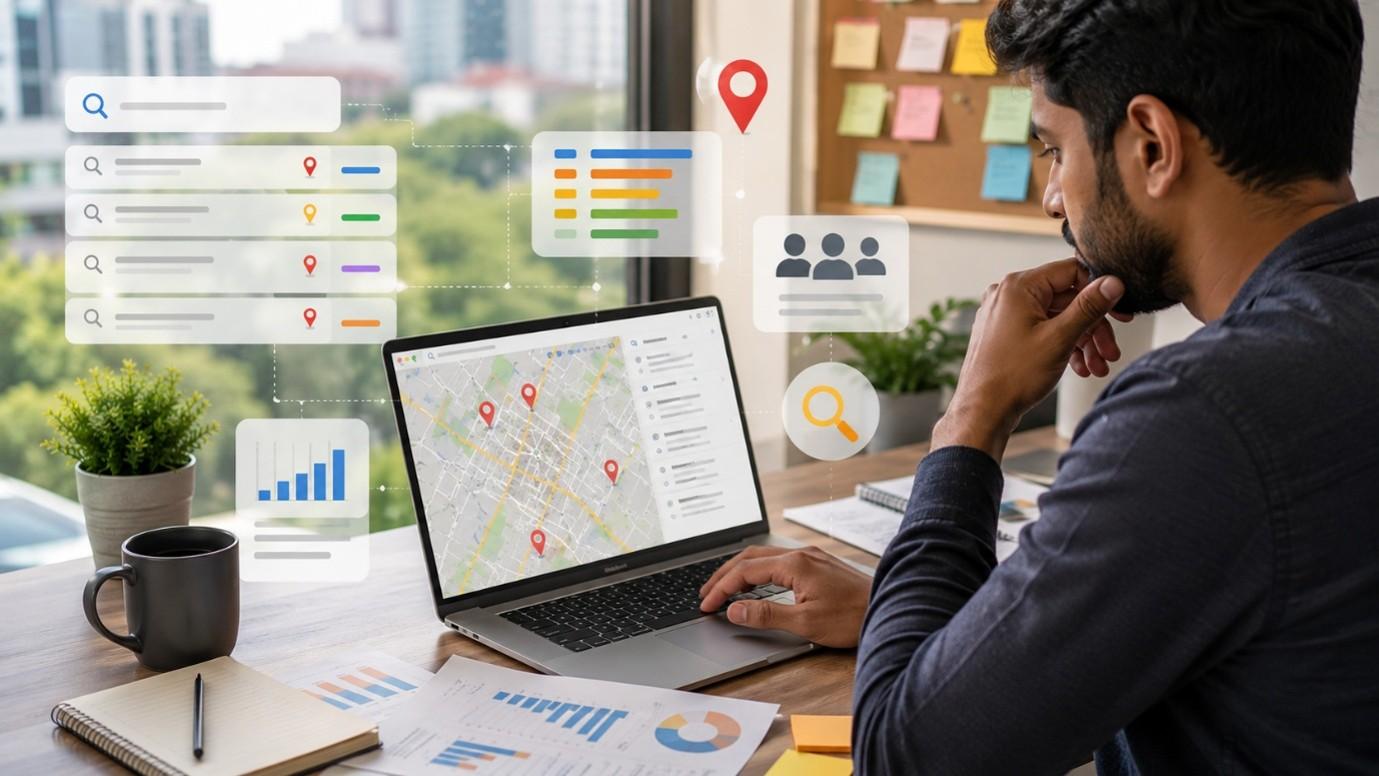
Your website should make it obvious what you do and where you do it. A service business might create pages such as:
- /seo-services/
- /local-seo/
- /google-business-profile-management/
If the business genuinely serves different locations, location-specific pages may also be appropriate. But there is an important warning.
Do not create dozens of nearly identical pages with different city names simply to manipulate rankings.
Each location page should provide genuine value. Include information such as services offered, location served, local customer needs, relevant examples, FAQs, testimonials, business information, and clear contact options.
The page should be useful even if Google never existed. That's a good test.
6. Build Genuine Customer Reviews
Reviews are important for two reasons:
- They influence how potential customers perceive your business.
- Google uses review-related information as part of its local ecosystem.
Google explains that reviews and ratings appear across Search and Maps, while its local ranking guidance notes that more reviews and positive ratings can help local prominence. But don't chase reviews purely for SEO. Ask real customers for honest feedback after a successful interaction.
A simple review process:
- Deliver the service.
- Ask the customer for genuine feedback.
- Make leaving a review easy.
- Thank customers for their feedback.
- Respond professionally (especially to negative ones).
- Learn from negative feedback.
Never manufacture reviews.
A smaller collection of genuine customer experiences is far more valuable than a suspicious collection of artificial ones.
If a customer leaves a negative review, respond professionally. Don't argue, don't blame the customer, and don't reveal private information. Instead, acknowledge the concern, remain professional, offer to investigate, move the detailed discussion to a private channel, and fix legitimate problems. That response is visible to future customers too.

7. Create Content Around Local Customer Problems
A local SEO blog shouldn't exist just to publish keywords. It should answer questions your potential customers ask.
For example, a roofing company could publish:
- How much does roof repair cost in Hyderabad?
- How often should a roof be inspected?
- 7 signs your roof needs immediate repair
- How to prepare your home for heavy rain
- Roof repair vs roof replacement: which is right?
These topics connect customer problems with business expertise. This is the core of a successful content marketing strategy that builds trust.
Notice the difference? That is much stronger than publishing: "Best Roofing Company Hyderabad | Roofing Company Hyderabad | Roof Repair Hyderabad" for the sake of keyword repetition.
Useful content demonstrates expertise while creating additional opportunities to appear for relevant searches.
8. Earn Local Links and Citations
A local citation is a mention of your business information on another website or directory. Relevant local links can come from local business organizations, industry associations, chambers of commerce, local publications, community organizations, relevant directories, local partnerships, sponsorships, and supplier websites.
The key word is relevant. You don't need hundreds of random backlinks. You want references that make sense for your business.
For example, a Hyderabad-based restaurant being mentioned by a respected local food publication makes considerably more sense than a random link from an unrelated website in another industry.
Directories can support local visibility when they are relevant and trustworthy. But don't fall into the "submit to 500 directories" trap. Quality matters more than quantity. Prioritize:
- • Relevant industry directories
- • Trusted local directories
- • Professional associations
- • Chamber websites
- • Reputable business platforms
- • Local publications
Keep important business details accurate. And don't pay for a directory simply because someone promises: "Guaranteed #1 Google ranking." Google explicitly warns that third parties cannot guarantee placement in Google Search or Maps.
Local link building becomes much easier when you stop thinking: "How do I get backlinks?" and start thinking: "Why would another local website want to mention my business?"
Here are practical ideas:
- Partner with complementary businesses: A wedding photographer could collaborate with wedding planners, venues, makeup artists, or event companies.
- Sponsor local events: A genuine community sponsorship may generate both awareness and a relevant local mention.
- Create useful local resources: For example, a "Complete Hyderabad Wedding Venue Guide" can attract organic attention from other sites.
- Share original expertise: Local publications often need expert comments. Be available when journalists or publishers need industry insight.
9. Strengthen Your Website's Technical SEO
Local SEO still depends on having a healthy website. Make sure your site loads quickly, works properly on mobile, uses HTTPS, has crawlable pages, has logical navigation, uses descriptive page titles, has useful meta descriptions, uses clean URLs, includes internal links, avoids broken pages, and has optimized images.
Google specifically recommends making websites fast and accessible across devices. For official requirements and documentation, check out Google Search Central.
Combined with website and funnel optimization, a fast, responsive site ensures search traffic converts into paying customers.
A beautiful website that takes forever to load is not a good local SEO asset.
10. Track What Produces Business Results
Ranking reports alone don't tell the whole story. While organic visibility builds equity over time, combining it with Google Ads management can provide immediate search coverage.
Track:
| Metric | Why It Matters |
|---|---|
| Local rankings | Shows visibility |
| Google Business Profile views | Shows discovery |
| Search queries | Shows how customers find you |
| Website clicks | Shows interest |
| Phone calls | Shows high intent |
| Direction requests | Shows offline intent |
| Form submissions | Shows leads |
| Bookings | Shows conversions |
| Organic traffic | Shows website visibility |
| Qualified leads | Shows actual business value |
Google Business Profile performance reporting can show searches, views, interactions, and other customer actions for verified profiles.
The question isn't:
"Did we move from position 8 to position 5?"
The better question is:
"Did local visibility create more qualified opportunities?"

Local SEO Checklist for Small Business
Use this as your practical starting point. Check off items as you complete them to track your progress:
For additional practical tips on growing your footprint on a budget, consult Ahrefs' small business SEO guide.
Checklist Completion
0% DoneHow Long Does Local SEO Take?
There is no honest universal number. Your timeline depends on competition, location, industry, website quality, existing authority, review profile, Business Profile quality, content quality, links, technical issues, and consistency of execution.
Some improvements can be noticed relatively quickly. Meaningful organic growth usually requires sustained work.
Google itself notes that after structured-data changes, crawling and indexing can take time, and that pages may take several days to be discovered and crawled.
The right mindset is:
Build → measure → improve → repeat.
Not:
Publish → wait → panic.
Is Local SEO Worth It for a Small Business?
If customers search online before choosing a local business, local SEO can be one of your most valuable long-term marketing channels. It is especially useful when your business depends on:
And you don't necessarily need to do everything at once. Start with the foundations. Then improve one layer at a time.
How G2G Media House Can Help
For a small business owner, SEO can become overwhelming quickly.
That's where an experienced marketing partner can help. G2G Media House offers SEO services for growing businesses alongside content, paid advertising, branding, websites, funnels, and social media marketing.
Its SEO offering includes keyword research, competitor analysis, on-page SEO, off-page SEO, link building, technical SEO, and monthly reporting.
That broader approach matters because local visibility doesn't exist in isolation. A person may discover your business through Google, visit your website, check your social media, read reviews, and then contact you.
Your entire digital presence needs to support that journey.
Frequently Asked Questions
Key Takeaways
- Start with an accurate, verified Google Business Profile.
- Make your website clearly communicate your services and locations.
- Research real local search intent instead of stuffing keywords.
- Earn genuine customer reviews and respond professionally.
- Build relevant local citations and links.
- Create genuinely useful local content.
- Keep your website fast, mobile-friendly, and technically healthy.
- Track leads and customer actions—not rankings alone.
- Avoid fake locations, fake reviews, and manipulative SEO tactics.
- Treat local SEO as an ongoing growth system, not a one-time task.
Conclusion
Local SEO for small business isn't about tricking Google. It's about making your business easier to understand, easier to discover, and easier to trust.
When someone searches for what you offer, you want Google to understand:
- This business is relevant.
- This business serves this area.
- This business is legitimate.
And when that customer reaches your website or Business Profile, you want them to think: "This is exactly what I was looking for."
- That's the real purpose of local SEO.
- Not vanity rankings.
- Not endless keyword reports.
More visibility. More qualified enquiries. More customers. More growth. For a small business competing against larger brands, that can make a very real difference.
Ready to Turn Local Searches Into Customers?
Getting found locally is only the first step. Your website, messaging, reviews, offers, and conversion process all need to work together.
If you're ready to build a stronger search presence and turn visibility into qualified leads, talk to G2G Media House about a customized SEO strategy or ask about our Free Local SEO Audit Checklist for Small Businesses.