Getting leads from Facebook and Instagram sounds simple:
- ➢ Create an ad.
- ➢ Put a form behind it.
- ➢ Collect contact details.
But anyone who has actually managed paid campaigns knows the harder question is: Are those leads worth anything?
A campaign can generate hundreds of leads and still produce very few sales. On the other hand, a well-structured Meta Ads campaign can consistently put qualified prospects into your sales pipeline.
That difference comes down to strategy. Meta Ads for Lead Generation work best when the entire system is designed around the customer journey—not simply the number of forms submitted.
In this guide, you'll learn how to build that system, from choosing the right campaign type and audience to creating better ads, qualifying prospects, tracking results, and turning leads into customers.
To succeed, you'll want to leverage professional social media marketing services that align visual creative with audience targeting.
Key Takeaway:
A cheap lead is not necessarily a good lead. The real goal is to generate prospects who have a genuine need, fit your offer, and are likely to become customers.
What Are Meta Ads for Lead Generation?
Meta Ads for Lead Generation are paid campaigns designed to turn people on Facebook, Instagram, Messenger, or related Meta placements into potential customers.
Instead of relying only on organic reach, you pay to put your offer in front of a carefully selected audience. A prospect might:
- • Submit an instant form
- • Complete a website form
- • Start a Messenger conversation
- • Start an Instagram conversation
- • Call your business
- • Request information
- • Book a consultation
- • Ask for a quote
- • Register for an event
Meta currently supports several lead-generation conversion paths, including forms, messaging, and calls. This makes Meta especially useful for businesses where a prospect needs to raise their hand before a salesperson takes over.
For official resources, you can learn about native Meta lead generation options directly from Meta Business.
How Meta Ads Generate Leads
Think of your campaign as a five-stage system:
If any one of these stages is weak, performance suffers. For example:
- ➢ You may have excellent targeting, but a boring advertisement.
- ➢ Or you may have a great advertisement but ask for 15 pieces of information in the form.
- ➢ Or you may generate hundreds of leads but wait three days before contacting them.
The campaign doesn't fail because Meta cannot generate leads. It fails because the system around the ads is broken.
A Simple Example:
Imagine a Hyderabad-based real estate company wants property enquiries. Instead of running a boring ad like "We sell premium apartments. Contact us.", they offer: "Get the Latest 2 & 3 BHK Project Price List + Availability".
- The ad attracts people interested in buying.
- The form collects essential information.
- The sales team receives the enquiry.
- The prospect gets contacted quickly.
Now the campaign has a clear job: create qualified buying conversations.

Why Meta Ads Can Be Powerful for Lead Generation
- ➢ Meta's major advantage is that people don't have to search for your business first.
- ➢ Google Search often captures existing intent, but Meta can help create interest before someone actively searches.
- ➢ Someone may not search for "best interior designer near me", but they may stop scrolling when they see a stunning home transformation.
That is the power of discovery-based advertising. Meta itself describes lead generation as an environment where businesses can create demand and nurture interest, rather than relying only on people already searching for a solution.
Other advantages include large potential audiences, detailed audience signals, visual advertising, Instagram placements, instant forms, messaging campaigns, and call campaigns.
Meta reported more than 1 billion instant forms submitted in 2023, with 16.6% growth compared with 2022. That tells us native lead capture is a major part of the Meta advertising ecosystem.
Meta Lead Generation Campaign Types
Choosing the right conversion path is one of the first strategic decisions.
1. Instant Forms
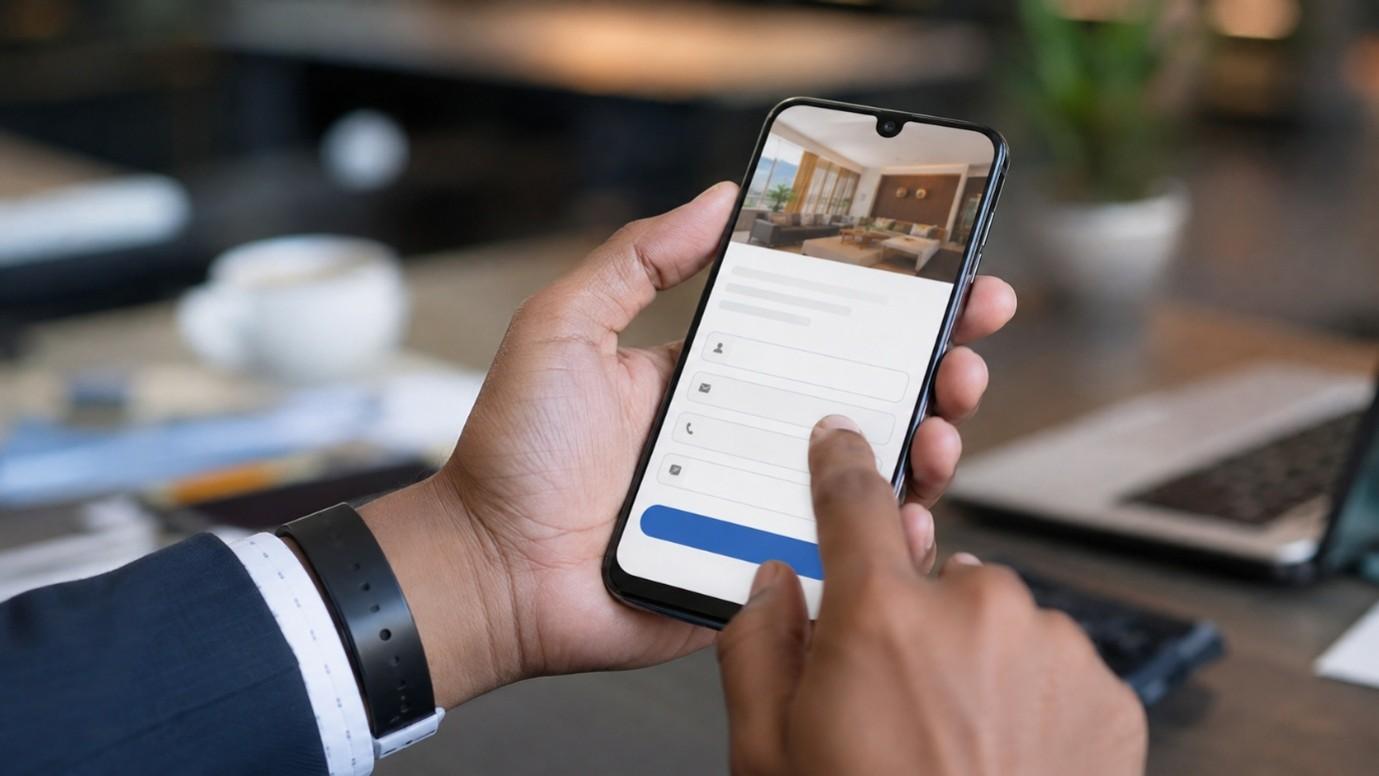
Instant Forms allow prospects to submit their information without leaving the Meta environment. This reduces friction because the user doesn't have to load a separate website. You can find detailed best practices on setting up Meta lead ads with forms.
They can provide information such as name, email, phone number, location, and answers to custom qualification questions.
Best for: Consultations, quote requests, real estate, education, financial services, local businesses, and service businesses.
2. Website Forms
Website lead campaigns send prospects to your landing page. This creates an additional step, but it can be useful when prospects need more information before submitting their details. A strong landing page can include testimonials, case studies, pricing, FAQs, and detailed service information.
3. Click-to-Message Lead Ads
Some prospects don't want to fill out a form; they want to ask a question. For these audiences, messaging can be extremely useful. A person could click an advertisement and start a conversation through Messenger or Instagram.
Meta recommends using clear, simple questions and setting expectations. Its guidance says six questions or fewer is usually optimal for automated chat flows. For local businesses, linking this to Facebook and Instagram advertising options creates a seamless path to conversation.
4. Call Ads
If your business closes leads through phone conversations, call campaigns make sense. They're particularly useful when the purchase requires consultation, customers have questions, the service is high-value, salespeople are available, and speed matters.
How to Set Up Meta Ads for Lead Generation
A successful campaign starts before you open Ads Manager.
Step 1: Define Your Ideal Customer
Don't begin with: "Everyone who might buy." That's too broad. Define: age range, location, job/business type, buying motivation, pain points, budget level, awareness stage, and previous interactions.
Step 2: Choose the Right Offer
A strong advertisement cannot rescue a weak offer. "Contact us today" is rarely as compelling as something specific and useful. Better examples include free consultations, free quotes, price guides, property lists, and downloadable guides.
Step 3: Choose Your Conversion Location
| Conversion Method | Best For |
|---|---|
| Instant Form | Fast lead capture |
| Website Form | Detailed sales pages |
| Messenger | Conversational sales |
| Instagram Messaging | Social-first audiences |
| Calls | High-intent enquiries |
Step 4: Build Your Campaign
In Meta Ads Manager, use the Leads objective when lead generation is the desired outcome. Then structure the campaign around: Audience, Budget, Conversion location, Creative, Offer, Form, Tracking, and Follow-up.
How to Create Ads That Generate Quality Leads
The best lead-generation ads aren't necessarily the prettiest; they're the ones that make the right person stop.
Start With the Problem
Instead of: "We are a leading digital marketing company."
Try: "Spending on ads but not getting enough qualified enquiries?"
The second message immediately identifies a problem.
A simple ad structure
Hook → Problem → Solution → Proof → CTA
Use creative that stops the scroll. Test different formats: short-form video, customer testimonials, before-and-after visuals, founder-led videos, carousels, and UGC-style content.
Don't assume one format will work forever. Creative fatigue is real. When performance declines, sometimes the audience isn't the problem—the creative is.
To learn how to construct these campaigns, HubSpot offers a great lesson on how to create Facebook Lead Ads.

How to Build a High-Converting Lead Form
Your lead form has one job: Get the right information with as little friction as possible.
Don't ask for everything you could possibly want. Ask for what the sales team needs.
Basic Form
- • Name
- • Phone
Qualified Lead Form
- • Name, Phone, Email
- • Service required
- • Location & Approximate budget
- • Preferred contact time
The second form may produce fewer leads, but that's not automatically bad. If it produces better prospects, your business may make more money.
Pro Tip:
Don't judge your form only by completion rate. Compare the quality of leads that reach sales.
Meta Ads Targeting Strategies for Better Leads
Targeting should reflect your customer journey.
Cold Audiences: These are people who haven't interacted with your business. Use relevant audience signals, broad targeting where appropriate, customer data, lookalike audiences, and strong creative.
Warm Audiences: These people already know you. They may have watched your videos, visited your website, engaged on Instagram, or interacted with previous forms. Awareness already exists, making them highly valuable.
Retargeting: Retarget people who showed meaningful interest but didn't convert. For example, someone watches your video, and later they see an advertisement offering a free consultation. That second interaction moves them closer to conversion.

How to Track and Measure Meta Ads for Lead Generation
The biggest mistake is tracking only cost per lead. CPL matters, but it isn't the final business metric. Track the complete funnel.
To learn about deeper API setups, read about the Meta Conversions API.
When measuring performance across your paid ads channels, employing professional performance marketing services can help connect Meta data with downstream CRM pipelines.
| Metric | What It Tells You |
|---|---|
| Impressions | How often ads were shown |
| CTR | How compelling the ad is |
| CPC | Cost of generating clicks |
| Leads | Number of enquiries |
| CPL | Cost per lead |
| Qualified Leads | Lead quality |
| Cost per Qualified Lead | Efficiency of quality acquisition |
| Appointments | Sales opportunity |
| Customers | Actual business outcome |
| Cost per Customer | True acquisition cost |
| Revenue | Financial return |
The metric that changes everything: Cost per qualified lead
Suppose Campaign A generates 100 leads at ₹200 each (Total spend: ₹20,000), but only 5 are qualified. That's ₹4,000 per qualified lead.
Suppose Campaign B generates 40 leads at ₹500 each (Total spend: ₹20,000), but 15 are qualified. That's ₹1,333 per qualified lead.
Campaign B has the higher CPL, but it is the better campaign. That's why businesses should avoid optimizing blindly for cheap leads.
Connect your lead source to your CRM whenever possible. A CRM helps you store leads, assign sales owners, track lead status, automate follow-up, record appointments, and measure customer acquisition. HubSpot's current Meta integrations support lead syncing and conversion-event workflows.
Don't only tell Meta that somebody submitted a form. Feed downstream information (Lead → Qualified Lead → Appointment → Customer) back into Meta's optimization systems to give you a clearer picture of campaign performance.
How to Reduce Wasted Ad Spend
Wasted spend usually comes from one of four problems:
- 1. Weak offer: Nobody cares enough to respond.
- 2. Wrong audience: The ad reaches people who aren't likely to buy.
- 3. Weak creative: The right people don't stop scrolling.
- 4. Poor follow-up: The business generates leads but fails to convert them.
You can't fix a sales problem by endlessly changing the advertisement. Look at the entire funnel.
Common Meta Ads Lead Generation Mistakes
Mistake 1: Optimizing for Cheap Leads
Cheap leads can look impressive inside Ads Manager, but revenue doesn't care about impressive dashboards. Focus on qualified leads and customers.
Mistake 2: Using the Same Ad for Everyone
Different audiences have different problems. A startup founder cares about growth, a homeowner cares about price, and a B2B decision-maker cares about ROI. Your messaging should reflect those differences.
Mistake 3: Asking Too Many Questions
Every extra field adds friction. Ask only what you genuinely need.
Mistake 4: Ignoring Follow-Up
A lead is not a customer. Create a follow-up process before launching the campaign.
Mistake 5: Changing Everything at Once
If you change audience, creative, offer, budget, and form all at the same time, you won't know what caused the result. Test systematically.
Mistake 6: Forgetting Creative Testing
One advertisement isn't a strategy. Build a testing pipeline. For details on how to build targeting and ad setups, search portals like Search Engine Land's guide on Meta Ads lead generation.
Best Practices: Pre-Launch Checklist
Use this interactive checklist before launching your next campaign:
Launch Readiness
0% ReadyHow to Scale a Successful Campaign
Don't double your budget simply because yesterday looked good. Scale based on evidence. First identify: winning audience, winning creative, winning offer, acceptable CPL, acceptable cost per qualified lead, and lead-to-customer rate.
Then increase investment carefully while continuing to test. Meta's current Advantage+ lead-generation tools can use automation and first-party data, with Meta specifically recommending CRM data and Conversions API for quality-focused optimization.
A practical scaling framework follows five stages:
- Stage 1: Test - Find promising combinations of copy, creatives, and forms.
- Stage 2: Validate - Confirm performance across enough data points.
- Stage 3: Improve - Fix lead quality, creatives, and follow-up times.
- Stage 4: Scale - Increase budget slowly while monitoring unit economics.
- Stage 5: Refresh - Introduce new creative assets before performance fatigue stalls.
A Simple Meta Ads Lead Generation Funnel
Here's a practical funnel you can adapt:
The ad is only one part of the machine. The businesses that win consistently are usually the ones that improve the whole machine.
Expert Tips for Better Lead Quality
- Tip 1: Match the ad to the landing experience - If your ad promises a free consultation, don't send people somewhere that talks about something completely different.
- Tip 2: Use qualification strategically - If your sales team cannot serve everyone, ask questions that identify your best prospects.
- Tip 3: Track sales outcomes - Don't stop at form submission.
- Tip 4: Follow up quickly - Interest is often highest immediately after someone enquires.
- Tip 5: Build multiple creative angles - Test pain points, desired outcomes, objections, proof and educational content.
- Tip 6: Let data guide decisions - Don't kill a campaign because one day looked bad. Don't scale it because one day looked amazing. Look for meaningful patterns.
Frequently Asked Questions
Key Takeaways
- Meta Ads can generate leads through forms, websites, messaging and calls.
- The cheapest lead isn't always the most valuable lead.
- A strong offer is critical.
- Creative should focus on the customer's problem or desired outcome.
- Keep forms simple but qualify prospects when necessary.
- Track qualified leads and customers—not just form submissions.
- Connect your CRM wherever practical.
- Use Pixel and Conversions API appropriately for stronger measurement.
- Test multiple creative angles.
- Scale campaigns based on business economics, not vanity metrics.
- Follow-up is part of lead generation—not an afterthought.
Meta Ads for Lead Generation: The Bottom Line
Meta Ads can be a powerful lead-generation channel, but successful campaigns are not built around clicks alone. They are built around people.
Understand what your audience wants, give them a compelling reason to respond, use the right conversion path, make the form easy, qualify leads, and optimize toward the outcomes that matter to the business. The goal isn't to collect the largest possible database; it's to build a reliable pipeline of people who have a genuine reason to buy.
And that's the difference between running Meta Ads and building a Meta lead-generation system.
For businesses looking to launch paid media setups, G2G Media House provides full-funnel digital marketing services to turn attention into qualified customers.
Ready to turn Meta Ads into a predictable lead-generation channel?
Talk to G2G Media House about your audience, offer, current campaign performance, and growth goals. Let's design a custom customer acquisition system that scales your business online.
If you are ready to build a reliable pipeline, contact us today to learn about our full lead generation services and ask about our Free Meta Ads Lead Generation Audit Checklist.